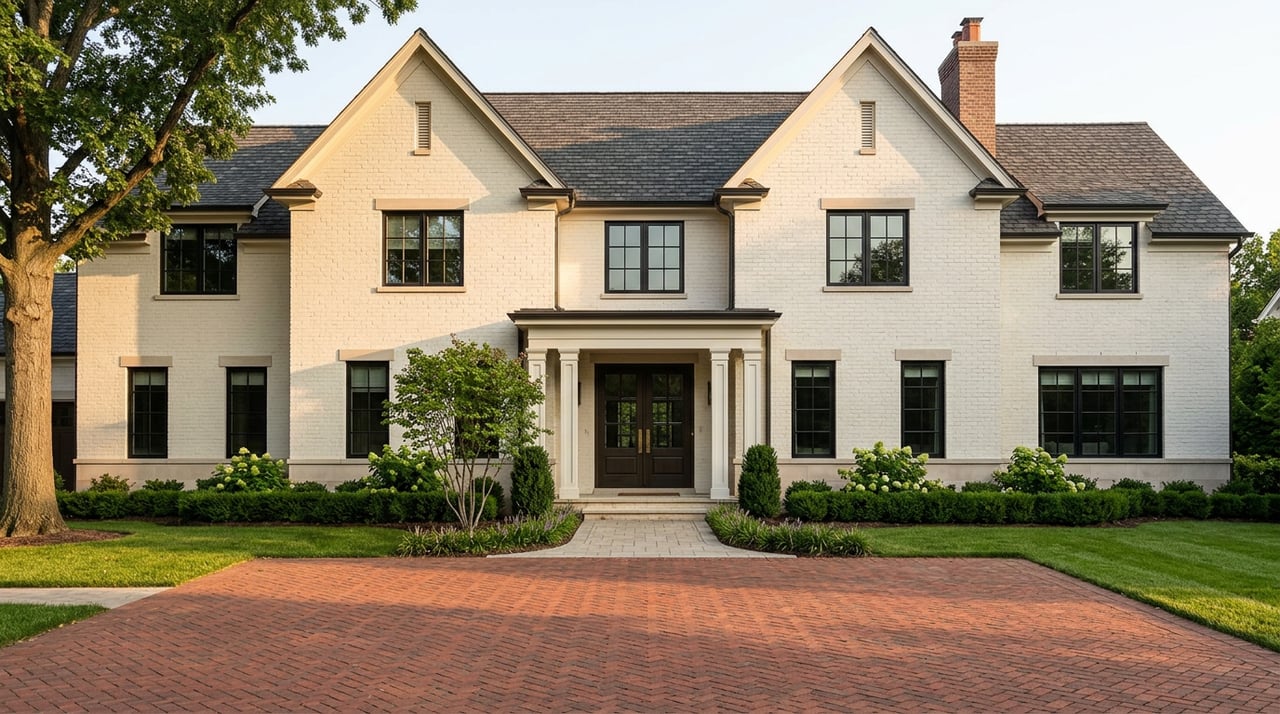
Ask a downtown Franklin homeowner what governs whether they can repaint their front door, and most will guess it has something to do with how old the house is. It doesn't. Two houses built in the same decade, a few blocks apart, can answer to entirely different rules, and the only thing that separates them is a boundary line on a zoning map that most buyers never think to ask about until they've already fallen for the house.
That line is the edge of Franklin's Historic Preservation Overlay, or HPO, and in early 2026 it became more consequential than it has been in years. The city didn't just tweak a rule inside the overlay. It rewrote its entire zoning code from the ground up, and the historic district's rulebook moved, expanded, and got a new address inside that code. If you're buying, selling, or renovating anywhere near downtown Franklin, that matters more than the listing photos do.
The Overlay Doesn't Care How Old Your House Is
Franklin's new Zoning Ordinance, adopted as Ordinance 2025-25 and effective January 13, 2026, organizes the city into eight separate overlay districts layered on top of standard zoning: a floodway overlay, a floodway fringe overlay, a hillside overlay, a neighborhood conservation overlay, a Columbia Avenue overlay, a Central Franklin overlay, a scenic corridor overlay, and the Historic Preservation Overlay itself. Only one of those, the HPO, triggers design review by the Historic Zoning Commission. A house doesn't earn its way into that overlay by being a certain age or looking a certain way. It's either inside the mapped boundary or it isn't, and the boundary was drawn by the city, not by architectural style.
This is the detail that trips people up during a purchase. A buyer can walk two 1900s cottages on the same street and assume both carry the same restrictions, when only one of them sits inside the overlay line. The other move: a newer infill home built to look historic can fall inside the HPO simply because of where it sits on the map, while a genuinely old farmhouse just outside the boundary answers to none of it. Before you write an offer on anything near Main Street, Five Points, or the Public Square, confirm the address against the overlay map itself. Don't rely on the house's appearance to tell you.
What Actually Requires a Certificate of Appropriateness
Once a property is inside the HPO, the Historic Zoning Commission reviews exterior work through something called a Certificate of Appropriateness, or COA. The commission itself is made up of nine citizen appointees representing architecture, history and preservation, the Planning Commission, and the broader community, and it evaluates every application against the city's adopted design guidelines and the Secretary of the Interior's Standards for Rehabilitation.
The list of what requires a COA is longer than most buyers expect:
- Additions of any kind, including enclosed additions, porches, stoops, porte cocheres, and decks
- Any exterior alteration or repair that also requires a building permit
- Site elements like fences, walls, sidewalks, driveways, parking areas, and exterior lighting
- Visible modern features, from mechanical equipment and rooftop additions to solar panels and security bars
- Interior work that changes the building's exterior appearance
- Partial or full demolition, and relocation of any structure
Some minor, non-visible changes, like alterations to a rear facade or a non-historic window replacement on a wall no one sees from the street, can qualify for a faster Administrative COA handled by city preservation staff rather than the full commission. But the default assumption for anything visible from the public right of way should be that it needs review, not that it slides through.
That review runs on the commission's calendar, not the homeowner's. The HZC meets monthly, and Franklin-area contractors who work through the process regularly report that applications generally need to be in well before the scheduled meeting to make that month's agenda, which means a project that requires full HZC review can easily add six to ten weeks to a timeline before work even starts, on top of ordinary permitting.
A house inside the historic overlay isn't judged on its age. It's judged on whether the proposed change is compatible with the district around it, which is a design question, not a history question.
The Ordinance Got Rewritten While Most People Weren't Watching
The version of the zoning code that governed all of this through 2025 has already been replaced. The new ordinance moved the historic resources rules to Chapter 18 and created a dedicated Chapter 19 for review bodies like the HZC, restructuring material that used to be scattered across the older code. The substance of the design review process (the design guidelines, the Secretary of the Interior's Standards, the HZC's composition) carried forward largely intact. What changed is the map underneath it and the numbering everyone from contractors to closing attorneys now has to reference.
That matters for anyone doing due diligence right now. Older blog posts, PDFs, and even some listing descriptions still floating around the internet reference sections of a code that no longer exists in that form. If you're evaluating a historic-core purchase, ask whether the overlay determination and any cited ordinance sections reflect the version effective January 13, 2026, not the one it replaced.
The Short-Term Rental Clock Buried in the New Code
Buried in the nonconformities chapter of the new ordinance is a detail that matters enormously if you're looking at a historic-core property with existing rental income. Short-term vacation rentals that were legally permitted before January 13, 2026 are grandfathered under the old rules, but that grandfathered status isn't permanent and it doesn't automatically pass to a new owner. Under the code, it ends the moment the property is sold or transferred, or if the property goes 30 continuous months without being used as a short-term rental.
In plain terms: if you're buying a historic downtown property specifically for its existing Airbnb income, the sale itself is one of the events that ends the exemption. Citywide, Franklin's current rules require short-term rentals in residential areas to be owner-occupied, cap rentals at 113 days per year, and require a business tax registration for each property. A buyer who assumes they're inheriting a seller's grandfathered, non-owner-occupied rental setup is very likely wrong, and that assumption belongs in the offer conversation, not discovered after closing.
Two Blocks, Two Rulebooks: The Margin District Test Case
The clearest illustration of how much the overlay boundary matters isn't hypothetical. It's under construction right now, one block south of Five Points.
The Margin District is a $165 million mixed-use project rising at the corner of Columbia Avenue and Margin Street, incorporating the former Handy Hardware building into a development that will eventually include more than 50,000 square feet of retail, roughly 50,000 square feet of office space, and 25 luxury condominium residences priced from just over $2 million. Reservations opened in November 2024, ground broke in 2025, and by early 2026 roughly half of the 25 units had already been reserved ahead of an expected 2027 delivery.
Despite sitting immediately adjacent to Franklin's historic core, and despite architecture designed to echo the district's stepped rooflines and antiqued brass detailing, The Margin District sits entirely outside the HPO boundary. Getting its buildings approved required a separate path entirely, an amendment to the Columbia Avenue Overlay allowing extra building height with a stepped-back upper floor, not a Certificate of Appropriateness. That means an owner in one of those new condominiums will never file a COA to change a window or add a balcony railing. A buyer in a historic cottage two streets away, inside the HPO line, will.
Neither approach is better. But a buyer choosing between a renovated 1900s home downtown and a new-construction condo one block away isn't just choosing an architectural style. They're choosing which regulatory process governs every future exterior change they might want to make.
What This Means Before You Write an Offer
If you're seriously considering a purchase in or near downtown Franklin, a few habits protect you:
- Confirm HPO status by address with the city's Planning and Sustainability department before assuming a house's age tells you anything about its review requirements
- Ask the seller or listing agent for any prior Certificates of Appropriateness, permits, or preservation easements tied to the property
- If a short-term rental history is part of the property's appeal, confirm in writing whether that permit is grandfathered, and understand that a sale is one of the events that can end it
- Budget a contingency, often in the range of 10 to 20 percent, for design-related adjustments if you're planning exterior work inside the overlay
A Few Questions Before You Write an Offer
Does a home's construction date determine whether it's in the historic overlay? No. The HPO boundary is a mapped line, not an age threshold. Homes built decades apart can sit on either side of it.
If I buy a historic-core home with an existing short-term rental permit, does that grandfathered status come with the house? Not automatically. Under the current ordinance, a sale is specifically listed as one of the events that ends grandfathered nonconforming status for a short-term rental.
Who do I actually contact to confirm overlay status and COA requirements for a specific address? The City of Franklin's Planning and Sustainability department handles historic preservation questions, and its preservation planning staff can confirm whether a specific address falls inside the HPO before you go further.
Buying or selling near downtown Franklin means dealing with a regulatory line that doesn't show up in a listing photo. Whether you're weighing a renovation-ready cottage inside the overlay or a new build just outside it, the paperwork difference is real and worth understanding before you're under contract. If you want a second set of eyes on what a specific address actually requires, Bobbi Jo Barnes works these details hands-on, start to finish. Let's find your way HOM, contact Bobbi Jo for hands-on help today.